Liquid-Like 3D Shapes for Modern Design
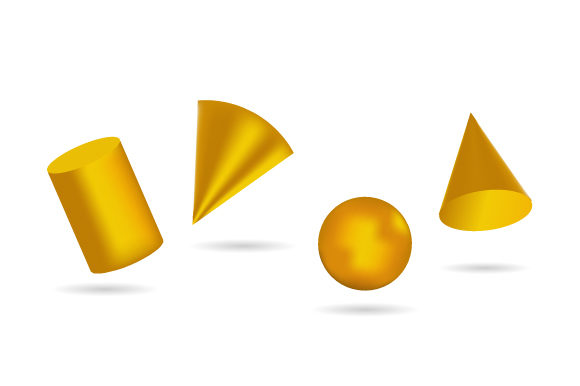
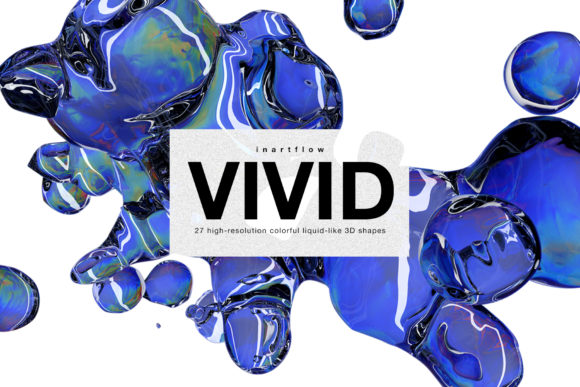
The visual landscape of digital and print media is shifting rapidly, moving away from flat, rigid aesthetics toward fluid, organic forms that capture attention instantly. Liquid-Like 3D Shapes represent a significant evolution in this trend, offering designers a toolkit to create compositions that feel alive and dynamic. Among the most compelling resources available is VIVID, a curated collection featuring 27 vibrant 3D shapes. This set addresses a critical need in contemporary graphic design: the demand for elements that are both visually striking and technically versatile.
When you integrate these liquid forms into your workflow, you are not merely adding decoration; you are leveraging a specific design language that signals modernity and innovation. Whether you are crafting a brand identity for a tech startup or designing an educational infographic, the ability to manipulate high-resolution 3D assets can elevate the perceived quality of your work. The following analysis explores how utilizing this specific set of assets can streamline your creative process and enhance the impact of your final deliverables.
Understanding the Visual Impact of Fluid Geometry
Traditional geometric shapes often convey stability and structure, but they can sometimes appear static or dated in fast-paced digital environments. Liquid-Like 3D Shapes introduce movement and softness without sacrificing structural integrity. They mimic the behavior of fluids, creating a sense of depth and texture that flat illustrations cannot achieve. This organic quality resonates with audiences because it feels natural and approachable, breaking the monotony of standard grid-based layouts.
VIVID capitalizes on this trend by providing 27 distinct variations. Each shape offers a unique curvature and lighting effect, allowing for diverse applications. For instance, a marketing professional might use a single, glossy liquid form as a focal point in a social media ad to draw the eye immediately. Alternatively, a web designer could arrange multiple shapes to create a background texture that adds depth to a landing page without overwhelming the user interface. The key advantage lies in the versatility; these shapes function equally well as standalone icons or as complex compositional elements.
Technical Precision Meets Artistic Freedom
One of the primary challenges designers face when sourcing 3D assets is balancing aesthetic appeal with technical specifications. Many trendy graphics are optimized solely for screen display, resulting in pixelation or blurriness when printed at larger scales. This limitation forces creators to choose between digital and print projects, often compromising the quality of one or the other.
This specific collection resolves that conflict through its high-resolution specifications. With dimensions of 5000x6200 pixels and a resolution of 300 dpi, these assets are engineered for professional-grade output. A small business owner planning a large-format banner for a trade show can utilize these files with confidence, knowing the edges will remain crisp and the colors will retain their vibrancy. Similarly, a blogger writing about sustainable technology can embed these images in high-definition articles without worrying about file size bloat or loss of clarity.
The inclusion of both PNG and JPEG formats further enhances usability. The transparent backgrounds found in PNG files allow for seamless integration into existing designs, while JPEGs offer compatibility for platforms that require standard image formats. This dual-format approach ensures that whether you are working in Adobe Photoshop, Canva, or a web development environment, the transition from asset to final product is smooth and efficient.
Practical Applications Across Creative Industries
The utility of Liquid-Like 3D Shapes extends far beyond simple decoration. By understanding the specific strengths of this set, professionals across various sectors can apply these assets to solve real-world communication problems. The following scenarios illustrate how these tools can be deployed effectively in different contexts.
- Brand Identity Development: Startups often struggle to differentiate themselves in crowded markets. Using the vibrant colors and unique forms from VIVID, a branding agency can create a logo or visual system that stands out. The liquid nature of the shapes suggests adaptability and forward-thinking, traits highly valued in modern business.
- Educational Materials: Educators and instructional designers can use these shapes to visualize abstract concepts. For example, a biology teacher explaining cellular structures or a chemistry instructor demonstrating molecular bonds can use the fluid geometry to make complex data more accessible and engaging for students.
- Event Marketing: For event planners and marketers, capturing attention within seconds is crucial. Large-scale posters, digital invitations, and stage backdrops benefit from the 3D depth provided by these shapes. The high resolution ensures that even viewed from a distance, the imagery remains sharp and professional.
- Web and App Interfaces: UI/UX designers can incorporate these elements to soften the user experience. Instead of harsh corners and rigid buttons, incorporating subtle liquid shadows or highlights can guide user interaction naturally. The 300 dpi resolution ensures that these details look perfect on retina displays and high-DPI monitors.
Optimizing Workflow and Creativity
Efficiency is a cornerstone of successful design practice. Sourcing individual 3D models requires time-consuming rendering processes or hiring specialized 3D artists, which can inflate project costs and timelines. Pre-made sets like VIVID eliminate this bottleneck. Designers gain immediate access to a library of polished assets, allowing them to focus on composition and strategy rather than model creation.
The ability to combine shapes into compositions opens up new avenues for creativity. You are not limited to using the shapes in isolation; layering them, rotating them, or altering their opacity can generate entirely new visual languages. A freelancer managing multiple client accounts can quickly adapt these assets to fit different brand guidelines, simply by adjusting color overlays or arranging the shapes to match the desired mood. This flexibility supports rapid prototyping and iterative design processes.
Strategic Considerations for Implementation
While the benefits of integrating Liquid-Like 3D Shapes are substantial, successful implementation requires thoughtful consideration of context. Not every design project calls for a heavy-handed use of 3D elements. Overuse can lead to visual clutter, distracting the audience from the core message. It is essential to balance these vibrant forms with negative space and clear typography.
Furthermore, while the resolution is excellent for most print and web applications, extremely large-scale outdoor billboards may still require vector scaling or custom rendering depending on the viewing distance. Designers should always test their compositions at the intended output size before finalizing the project. Additionally, accessibility should remain a priority; ensure that text placed over or near these 3D shapes maintains sufficient contrast and readability for all users.
The choice to use VIVID is particularly advantageous for those who need consistency across multiple touchpoints. Because all 27 shapes share a cohesive style and resolution, they maintain a unified look whether used on a mobile app, a printed brochure, or a website header. This consistency strengthens brand recognition and reduces the cognitive load on the viewer, who does not have to adjust to varying visual styles.
Conclusion
In an era where visual content competes for limited attention spans, the quality and relevance of design assets are paramount. Liquid-Like 3D Shapes offer a powerful solution for professionals seeking to modernize their visual output. The VIVID collection, with its 27 vibrant options and high-resolution specifications, provides the technical foundation necessary for both digital and print excellence.
By adopting these tools, creators can save time, reduce production costs, and produce work that feels fresh and innovative. Whether you are a marketer aiming to boost engagement, an educator simplifying complex topics, or a developer enhancing user interfaces, these shapes provide the building blocks for effective communication. The combination of artistic trend alignment and rigorous technical standards makes this set a valuable addition to any design toolkit, empowering users to achieve their goals with greater efficiency and impact.