Colorful Background Wave
In the landscape of digital design, few elements are as versatile yet visually demanding as a background that must balance energy with clarity. The Colorful Background Wave concept addresses this specific challenge by merging dynamic motion with structured utility. It is not merely an aesthetic choice; it is a functional framework used to guide user attention, establish brand identity, and create depth in two-dimensional spaces. When executed correctly, this style transforms a flat interface or document into an engaging visual narrative without overwhelming the core content.
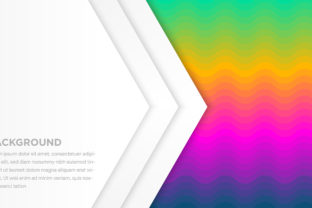
This resource combines fluid, wavy lines with a sophisticated gradient palette, typically utilizing white and grey tones to ensure readability while introducing pops of color for emphasis. The inclusion of half-hexagon or arrow concepts adds a layer of directional logic, turning abstract art into a tool for communication. Whether you are designing a corporate presentation, a landing page, or a marketing brochure, understanding the mechanics behind this pattern is essential for modern creators.
The Architecture of Abstract Flow
At its core, the Colorful Background Wave relies on the interplay between organic curves and geometric precision. Unlike rigid grid systems, waves suggest movement and progression. This is particularly effective in business contexts where the goal is to convey innovation, forward momentum, or technological advancement. The "wave" element serves as a natural leading line, drawing the eye across the page from left to right, which aligns with how most languages are read.
The integration of the white-to-grey gradient background is a critical design decision. A pure white background can sometimes appear sterile, while a solid dark background may reduce contrast for text-heavy documents. The gradient provides a subtle sense of lighting and dimension, mimicking the way light hits a curved surface. This creates a 3D effect that feels tactile, almost like high-quality paper stock, even when viewed on a screen. By isolating these elements against a neutral backdrop, the design ensures that the colorful accents—be they blue, green, red, or purple—stand out sharply without causing visual fatigue.
Geometric Integration: Hexagons and Arrows
What distinguishes this specific vector set from generic wave patterns is the strategic placement of geometric shapes. The use of half-hexagons or arrows is not arbitrary; it introduces a structural skeleton to the fluid background. In graphic design, hexagons often symbolize stability, efficiency, and connectivity, frequently associated with science, technology, and engineering sectors. When paired with a wave, they ground the abstract motion in concrete structure.
Similarly, arrow motifs serve a dual purpose. Visually, they reinforce the directionality of the wave. Functionally, they act as signposts for information hierarchy. For example, a designer might place a call-to-action button within a space defined by an arrow shape, subtly guiding the user toward the next step in a process. This combination allows the Colorful Background Wave to function as more than just decoration; it becomes a navigational aid. The isolated nature of these icons means they can be repositioned easily, allowing for customization based on the specific layout requirements of a project.
Practical Applications in Professional Environments
The versatility of this design asset extends across various professional domains. Its primary strength lies in its ability to adapt to different media types while maintaining a cohesive look. Here is how it performs in real-world scenarios:
- Digital Presentations and Pitch Decks: Investors and clients scan slides quickly. A slide deck featuring a Colorful Background Wave immediately signals a modern, prepared mindset. The gradient background reduces eye strain during long presentations, while the colored waves highlight key data points or section breaks. The half-hexagon shapes can house charts or bullet points, keeping the layout organized.
- Corporate Branding and Stationery: For businesses aiming to project a futuristic yet approachable image, this pattern offers the perfect middle ground. Letterheads, business cards, and email signatures benefit from the clean lines and professional color scheme. The abstract nature ensures the design remains timeless, avoiding the trap of fleeting trends.
- Web Design and User Interfaces: In web development, background patterns need to load quickly and scale well. Vector-based wave illustrations are ideal for this. They can be scaled to any resolution without pixelation. The "blank" areas created by the negative space in the wave pattern are perfect for overlaying text, ensuring high legibility. The directional flow helps users navigate through complex websites intuitively.
- Marketing Materials and Covers: Book covers, e-book interiors, and report covers require a hook. The Colorful Background Wave provides immediate visual interest. The combination of mint, blue, and purple gradients suggests creativity and intelligence, making it suitable for educational resources, tech reports, or creative portfolios.
Evaluating Quality and Usability
When selecting a graphic resource like this, professionals look beyond mere aesthetics. They evaluate the technical quality, flexibility, and consistency of the assets. High-quality vector files should allow for non-destructive editing. Users should be able to adjust the opacity of the gradients, change the hue of the colored waves, or resize the hexagon elements without losing sharpness.
The Colorful Background Wave excels in consistency. Because the pattern is generated mathematically or drawn with precise paths, repeating sections remain uniform. This is crucial for large-scale projects like multi-page manuals or website templates where mismatched edges can look unprofessional. The reliability of the file format ensures that whether the output is a small mobile icon or a large-format billboard, the image retains its integrity.
However, there are limitations to consider. The very features that make the design dynamic—the curves and gradients—can sometimes clash with highly detailed photography or complex typography. If the background is too busy, it competes with the foreground content. Therefore, successful implementation requires discipline. Designers must often desaturate the colors or increase the blur slightly to ensure the text remains the focal point. The "light" aspect of the gradient is helpful here, as it naturally pushes darker elements forward, but overuse of the colorful elements can lead to visual noise.
Strategic Color Psychology
The color palette chosen for this pattern is deliberate. Blue and green tones dominate the spectrum, evoking feelings of trust, growth, and calm. These are safe, professional choices for corporate environments. However, the inclusion of red, purple, and orange accents injects energy and urgency. This mix allows designers to tailor the mood of the final product. A financial report might lean heavily on the cool blues and greys, while a creative agency's portfolio might emphasize the vibrant purples and oranges.
The gradient transition from white to grey also plays a psychological role. White represents clarity and openness, while grey adds a touch of sophistication and neutrality. This combination prevents the design from feeling too childish (pure primary colors) or too somber (monochrome). It strikes a balance that appeals to a broad adult audience, from entrepreneurs to educators.
Maximizing Long-Term Value
For freelancers, agencies, and in-house teams, the long-term value of a design asset is determined by its reusability. The Colorful Background Wave is not a one-off solution; it is a foundational element that can be repurposed indefinitely. As branding evolves, the underlying structure of the wave remains relevant. Designers can simply swap out the accent colors to match new brand guidelines while retaining the familiar, trusted layout.
This flexibility reduces the need to commission new artwork for every project. Instead of starting from scratch, teams can utilize the existing library of half-hexagons, arrows, and wave curves to assemble fresh compositions quickly. This efficiency translates directly to cost savings and faster turnaround times. Furthermore, because the style is abstract rather than illustrative of specific objects, it avoids dating quickly. Trends in illustration come and go, but the fundamental principles of flow, balance, and color theory remain constant.
Implementation Best Practices
To get the most out of this resource, start by defining the hierarchy of your content. Place the most important text in the areas of highest contrast, typically where the white meets the grey or where the colored waves provide a strong border. Use the arrow concepts to create a logical path for the viewer's eye. Do not force the pattern to fit; instead, let the pattern dictate the layout. If the wave flows diagonally, align your columns accordingly. Finally, test the design in both print and digital formats. The perceived vibrancy of colors can shift significantly between screens and paper, so always verify the output before finalizing.
In conclusion, the Colorful Background Wave represents a robust solution for modern design challenges. It successfully merges the softness of organic forms with the precision of geometric symbols, creating a visual language that is both engaging and professional. For anyone looking to elevate their visual communication, this asset offers a reliable foundation that supports clarity, direction, and aesthetic appeal.