3D Layered Alpabet - Y: Why Format Matters More Than You Think
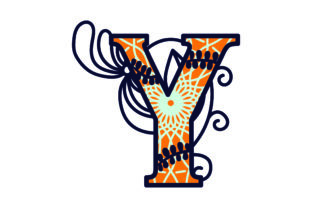
You have likely stumbled upon the 3D Layered Alpabet - Y while searching for a striking visual element to elevate your latest project. Whether you are a small business owner crafting a logo, a blogger designing an eye-catching header, or an educator creating engaging classroom materials, this specific letter design offers a distinct depth and character that flat fonts simply cannot replicate. The layered effect creates a sense of dimension, turning a simple character into a piece of art that catches the light and the eye.
However, acquiring the file is only the first step. Many creators make the critical error of assuming that a single download provides everything they need for every scenario. This oversight often leads to frustration when the file refuses to work with their chosen software or fails to produce the desired quality in print. To ensure you get the most out of this design, it is essential to understand exactly what you are receiving and how to utilize these files correctly.
The Power of Multiple Formats
One of the most significant advantages of purchasing the 3D Layered Alpabet - Y is the variety of formats included in the package. You will receive the design as an SVG File, a Transparent PNG, an EPS file, and a DXF file. Each format serves a specific purpose, and using the wrong one can compromise your entire workflow.
- SVG Files: These are vector-based images that scale infinitely without losing quality. They are ideal for web design, responsive layouts, and any digital application where you might need to resize the letter from a tiny icon to a massive banner.
- Transparent PNGs: Perfect for quick use in presentation software, social media graphics, or website headers where you need an immediate image with a clear background. They are raster-based, meaning they have a fixed resolution.
- EPS Files: Essential for professional graphic designers who need to edit the layers within Adobe Illustrator or other vector software. This format ensures high-quality output for large-scale printing.
- DXF Files: Crucial for hobbyists and professionals working with laser cutters, CNC machines, or vinyl plotters. This format translates the 3D layers into precise cutting paths for physical fabrication.
Ignoring the specific strengths of each format is a common pitfall. For instance, trying to send a low-resolution PNG to a commercial printer will result in pixelated edges, ruining the crisp look of the 3D layers. Conversely, attempting to load a DXF file directly into a web browser will fail entirely because browsers do not natively support that specific vector standard.
Common Pitfalls in Selection and Application
Even with the right files in hand, users often struggle with how to integrate the 3D Layered Alpabet - Y into their projects. A frequent mistake involves underestimating the complexity of the layering process. Unlike a standard font that renders instantly, this design relies on multiple stacked elements to create its depth. If you treat it like a single-layer text object, you lose the intended visual impact.
Another overlooked detail is color management. Because the design features distinct layers, changing the color of the entire "Y" at once can flatten the appearance. In many cases, the top layer should be a different shade or texture than the bottom layers to emphasize the 3D effect. Failing to adjust these colors individually can make the letter look muddy rather than dimensional.
For those using the DXF version for physical projects, a critical error is neglecting to check the scale before sending the file to a cutter. Vector files are unit-agnostic; they do not know if they represent millimeters, inches, or meters. If you assume the default setting is correct without verifying the dimensions against your material size, you might end up with a letter that is too small to see or too large to fit on your workspace.
Ensuring Quality and Usability
To avoid these issues, start by opening the files in the appropriate software for your needs. If you are a marketer planning a social media campaign, open the Transparent PNG in your design tool immediately to check the resolution. Ensure the background is truly transparent and that the edges are clean. If the image looks blurry, do not attempt to sharpen it digitally; instead, return to the source and export a higher-resolution version or use the SVG/PNG interchangeably depending on the platform requirements.
When working with the EPS or SVG versions, take the time to ungroup the layers. This allows you to manipulate the front and back planes of the letter separately. By adjusting the spacing between the layers slightly, you can enhance the shadow effect and create a more pronounced 3D illusion. This level of control is lost if you keep the file grouped as a single object.
For the laser cutting enthusiasts using the DXF file, always run a test cut on scrap material. Verify that the laser beam passes through the designated cut lines cleanly and that the layers align perfectly when assembled. Misalignment here can ruin the structural integrity of the final product, making it difficult to stack the layers correctly.
Making the Right Decision Before You Start
Before diving into a project with the 3D Layered Alpabet - Y, ask yourself what the final output will be. Are you designing a digital banner? Stick to SVG or PNG. Are you creating a physical sign? You will need the DXF or EPS files. Are you producing a brochure? The EPS file will give you the best print fidelity.
By understanding the specific capabilities of each format—SVG File, Transparent PNG, EPS, and DXF—you can avoid costly mistakes and wasted time. This design is versatile, but its power lies in how you choose to deploy it. Taking a moment to review the file specifications and matching them to your project goals will ensure that your 3D Layered Alpabet - Y stands out for all the right reasons.
Ultimately, success comes from preparation. Do not rush to apply the design until you have tested it in your specific environment. Whether you are a seasoned pro or just starting out, respecting the technical nuances of the file types will lead to cleaner, more professional results. With the right approach, this layered letter becomes a cornerstone of your creative work, adding depth and style to any medium you choose.